
Introduction
The automotive industry is undergoing one of the most significant transformations in its history. Vehicles are no longer just machines designed for transportation; they are evolving into intelligent, connected, and sustainable systems powered by advanced technology. From electric vehicles and autonomous driving to artificial intelligence and smart connectivity, auto technology trends are redefining how we drive, travel, and interact with cars. This article explores the most important auto technology trends that are shaping the future of the automotive industry.
1. Electric Vehicles (EVs) and Electrification
Electric vehicles are at the forefront of automotive innovation. With growing concerns about climate change, fuel costs, and environmental pollution, governments and automakers are shifting toward cleaner transportation solutions. EVs run on electric motors powered by rechargeable batteries, producing zero tailpipe emissions.
Advancements in battery technology, such as lithium-ion and solid-state batteries, have improved driving range, charging speed, and battery lifespan. Fast-charging stations are expanding globally, making EVs more practical for daily use and long-distance travel. As production costs decrease, electric vehicles are becoming more affordable, accelerating their adoption worldwide.
2. Autonomous and Self-Driving Vehicles
Autonomous driving technology is another major trend reshaping the automotive landscape. Self-driving cars use sensors, cameras, radar, lidar, and artificial intelligence to navigate roads with minimal or no human intervention.
While fully autonomous (Level 5) vehicles are still in development, many modern cars already offer Level 2 and Level 3 automation features such as adaptive cruise control, lane-keeping assistance, automatic braking, and traffic jam assist. These systems improve road safety, reduce driver fatigue, and lower the risk of accidents. In the future, autonomous vehicles are expected to transform public transportation, logistics, and ride-hailing services.
3. Artificial Intelligence in Automobiles
Artificial intelligence (AI) plays a critical role in modern vehicle technology. AI algorithms analyze massive amounts of data in real time to enhance vehicle performance, safety, and user experience.
AI is used in driver-assistance systems, voice recognition, predictive maintenance, and personalized in-car settings. Smart AI assistants can understand natural language commands, control infotainment systems, and provide real-time navigation updates. In autonomous vehicles, AI enables object detection, decision-making, and route optimization, making driving safer and more efficient.
4. Connected Cars and Internet of Things (IoT)
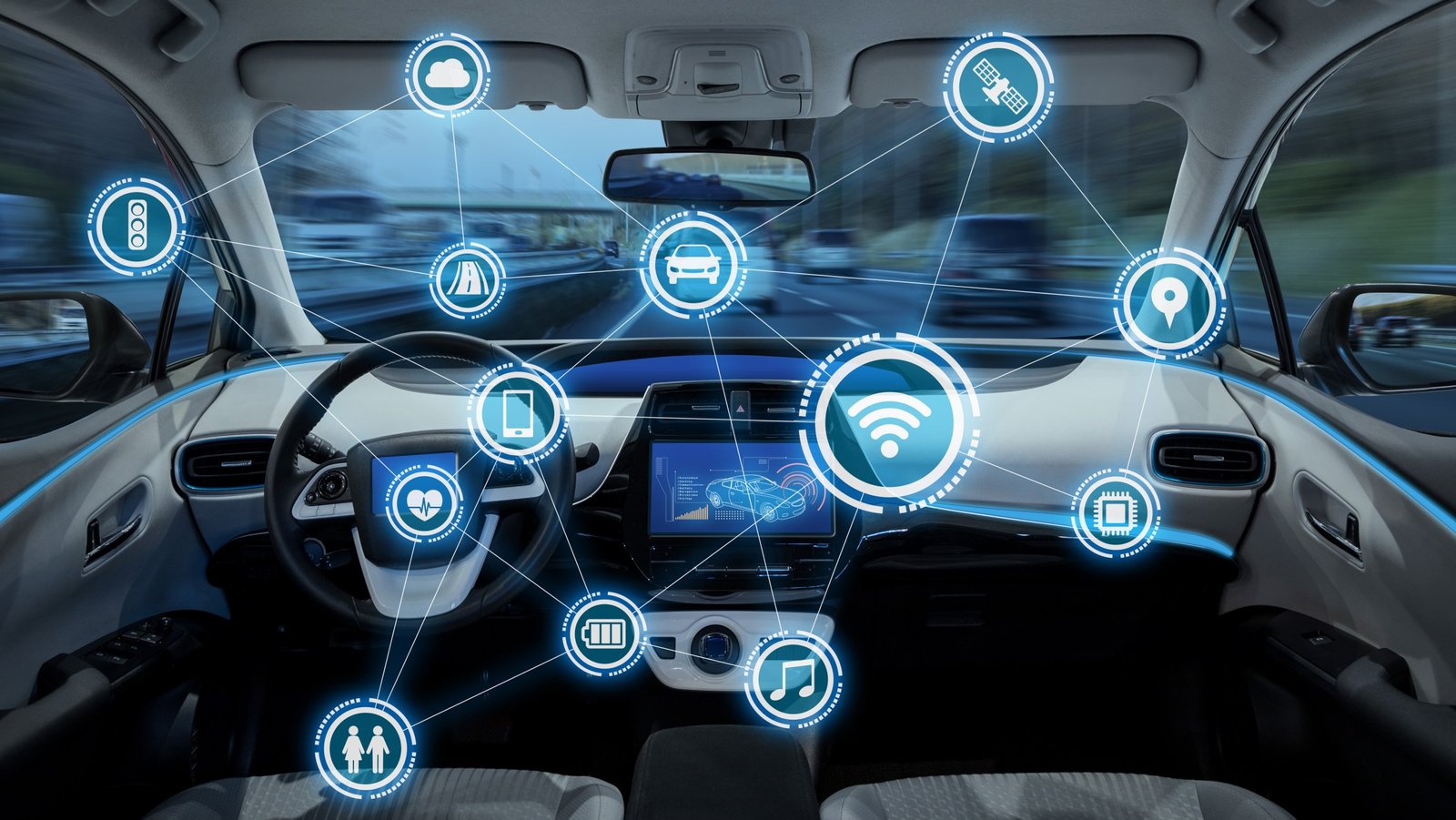
Connected car technology allows vehicles to communicate with the internet, other vehicles, and infrastructure. Using IoT, cars can share real-time data related to traffic conditions, weather, road hazards, and vehicle performance.
Features such as live GPS tracking, remote vehicle diagnostics, over-the-air (OTA) software updates, and smartphone integration are becoming standard. Vehicle-to-Everything (V2X) communication improves traffic management and reduces accidents by allowing cars to communicate with traffic lights, pedestrians, and road systems.
5. Software-Defined Vehicles (SDVs)
Modern vehicles are increasingly becoming software-defined, meaning that many functions are controlled by software rather than mechanical components. This allows manufacturers to update vehicle features remotely through OTA updates without requiring a visit to the service center.
Software-defined vehicles offer enhanced customization, improved cybersecurity, and continuous performance upgrades. Automakers can introduce new features, fix bugs, and optimize systems long after the vehicle has been sold. This trend is changing the traditional automotive business model and creating new revenue streams through digital services.
6. Advanced Driver Assistance Systems (ADAS)
ADAS technologies are designed to support drivers and enhance road safety. These systems use sensors and cameras to monitor the vehicle’s surroundings and assist with driving tasks.
Common ADAS features include automatic emergency braking, blind-spot monitoring, lane departure warning, parking assist, and collision avoidance systems. As these technologies become more advanced and affordable, they are being integrated into mid-range and entry-level vehicles, significantly reducing accident rates and improving driving confidence.
7. Sustainability and Eco-Friendly Materials
Sustainability is a growing focus in auto technology trends. Automakers are adopting eco-friendly materials such as recycled plastics, bio-based fabrics, and lightweight composites to reduce environmental impact.
Lightweight vehicle designs improve fuel efficiency and extend electric vehicle range. Manufacturers are also investing in green manufacturing processes, renewable energy usage, and recycling programs to achieve carbon neutrality. Sustainability is no longer optional; it is becoming a key factor in consumer purchasing decisions.
8. Smart Infotainment and In-Car Experience
The in-car experience has evolved dramatically with the integration of advanced infotainment systems. Touchscreens, digital dashboards, voice controls, and smartphone connectivity are now standard features.
Modern infotainment systems support navigation, entertainment, real-time traffic updates, and app integration such as Android Auto and Apple CarPlay. Some vehicles even offer augmented reality (AR) head-up displays that project navigation and safety information directly onto the windshield, improving driver awareness and convenience.
9. Cybersecurity in Automotive Technology
As vehicles become more connected and software-driven, cybersecurity has become a critical concern. Protecting vehicles from hacking, data breaches, and unauthorized access is essential.
Automakers are investing heavily in automotive cybersecurity solutions, including encrypted communication, secure software updates, and intrusion detection systems. Ensuring data privacy and vehicle safety is vital for building consumer trust in connected and autonomous vehicles.
10. Future Outlook of Auto Technology
The future of auto technology is exciting and full of possibilities. Innovations such as hydrogen fuel cells, solid-state batteries, fully autonomous transportation networks, and smart cities will further transform mobility.
Cars will become safer, cleaner, and more intelligent, offering seamless integration with digital ecosystems. Auto technology trends will continue to evolve, driven by artificial intelligence, sustainability goals, and changing consumer expectations.
Conclusion
Auto technology trends are revolutionizing the automotive industry at an unprecedented pace. Electric vehicles, autonomous driving, AI, connected cars, and sustainable practices are shaping the future of mobility. These advancements not only improve performance and safety but also contribute to a cleaner and smarter world. As technology continues to advance, the automotive industry will play a key role in defining how we travel, connect, and live in the years to come.